Deferred
My role
concept & creative direction
interaction design, prototyping,
implementation
Context
individual project,
self-initiated,
Nov 2025 - Jan 2026
Deliverables
user research,
prototype,
interactive web experience
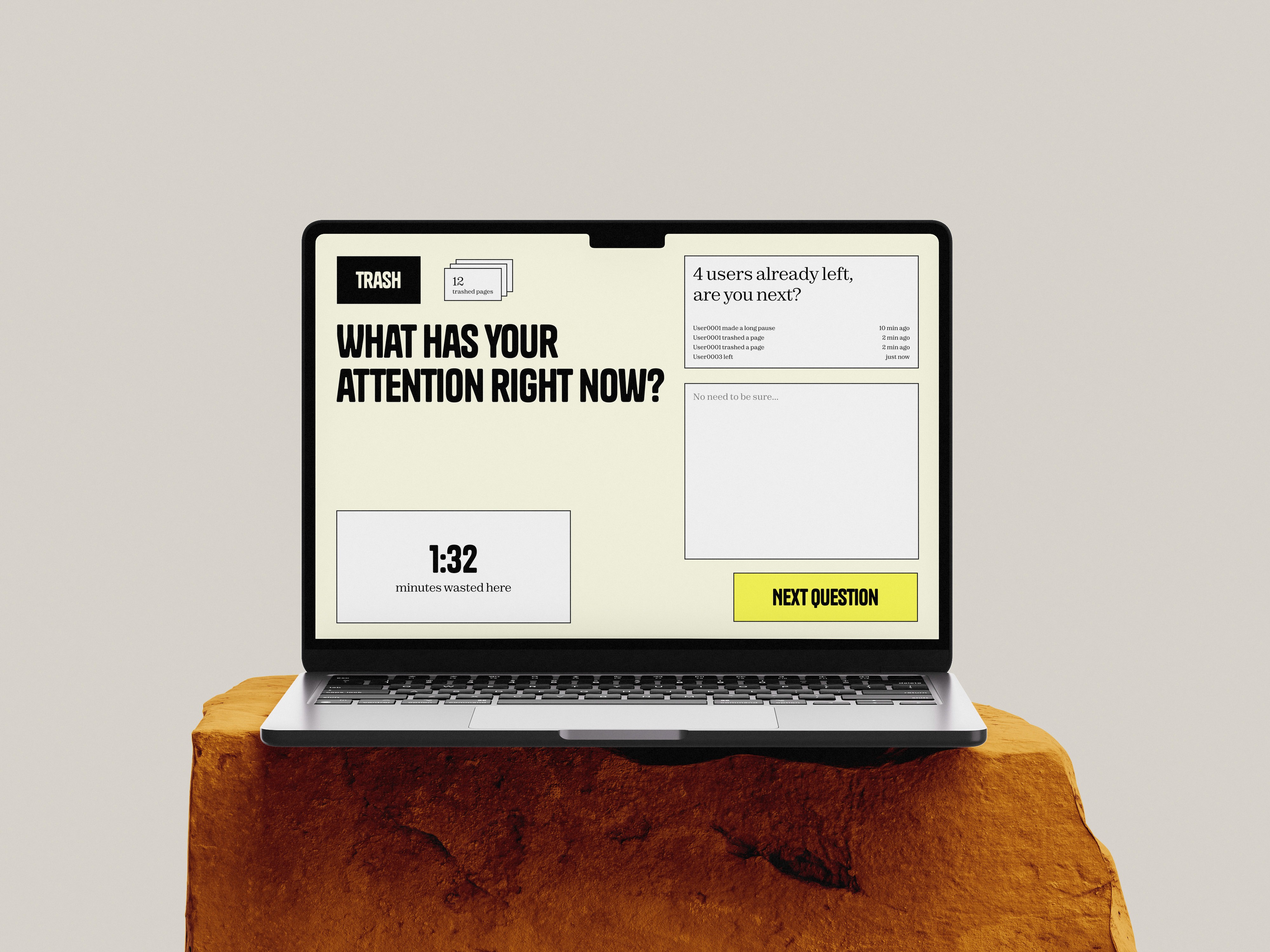
Deferred is an experimental interactive web experience exploring how digital interfaces shape thinking, writing, and reflection.
While most digital products prioritize clarity, consistency, speed, and reversibility, this project intentionally works against these principles. It is designed to require effort, attention, and discomfort, treating the time spent thinking as valuable and finite, and refusing to compress it into a fast or frictionless experience.
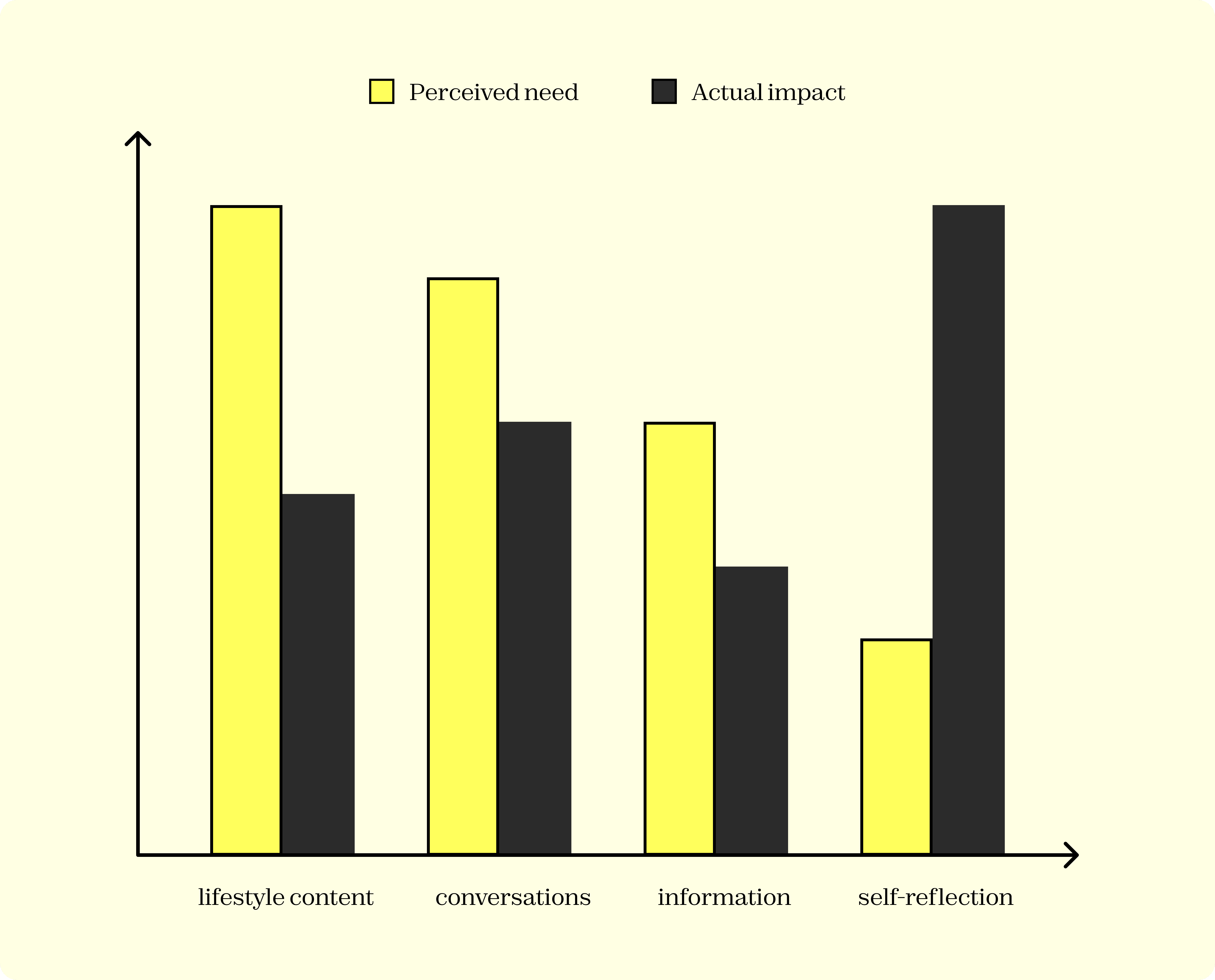
I returned to my old high school to interview 50 students, initially aiming to design a software that would help them choose a career path through better information, chatbots, tests, or personalization. Instead, the research showed that most students couldn’t describe what they wanted beyond vague labels like “a programmer” or “a programmer at Google,” and their career research was largely passive, shaped by TikTok “day in the life” videos and second-hand opinions.
When asked what would help them decide, many said they needed even more “day in the life” content and more conversations with students and young professionals. At first, this could suggest building a platform to connect high schoolers with university students or to centralize that content.
But I was already there as a student, willing to talk, answer questions, and connect them with anyone in my network, and still almost no one engaged or reached out afterward. That made it clear that another platform would not solve the issue. We already have LinkedIn for access to people and social media for endless content.
The real barrier is not access, but the effort required to try, to engage, and to stay with discomfort long enough for clarity to form. So I designed an experimental experience that makes people to slow down and commit to answering questions, not for the sake of finishing or achieving anything, but simply for themselves.
The project emerged from a personal and research-driven realization: in the digital age, there is no shortage of information, yet we don’t know ourselves.
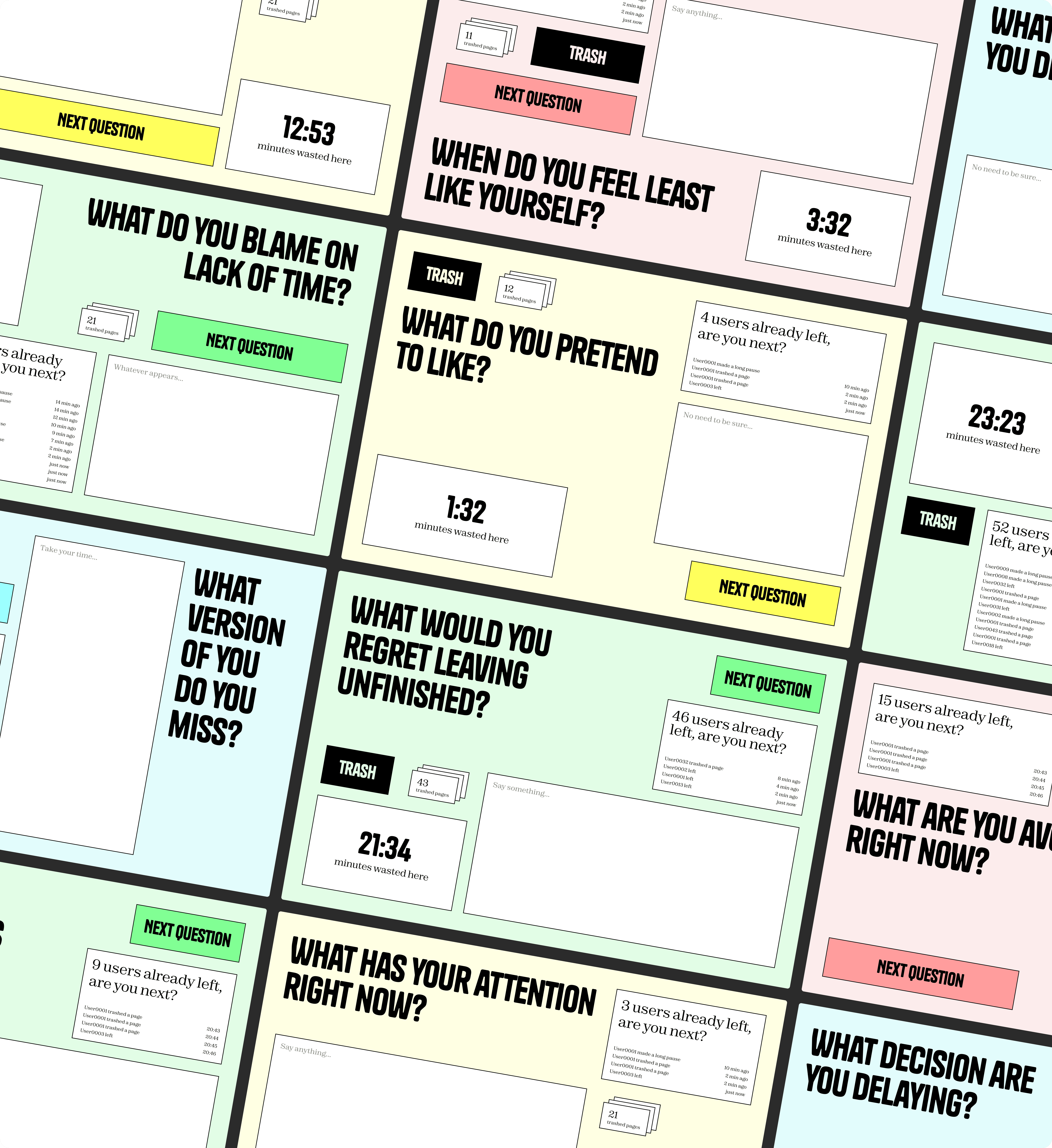
When someone enters, they are immersed in a seemingly endless sequence of progressively personal questions, with no ability to skip ahead or return to previous questions. Text editing is removed entirely; users cannot revise individual words and may only discard an entire “page” at once, emulating the nature of a typewriter.
Layouts are algorithmically generated and shift unpredictably, disrupting familiarity and preventing autopilot behavior. A visible timer reinforces the idea that thinking takes time and cannot be optimized away. Time is reframed not as progress toward completion, but as a commitment to sustained thought.
The interface is intentionally difficult, making hesitation, discomfort, and effort integral to the experience, and ultimately positioning leaving the experience as the most meaningful action a someone can take.
I designed an experimental experience that encourages people to slow down and sit with discomfort.
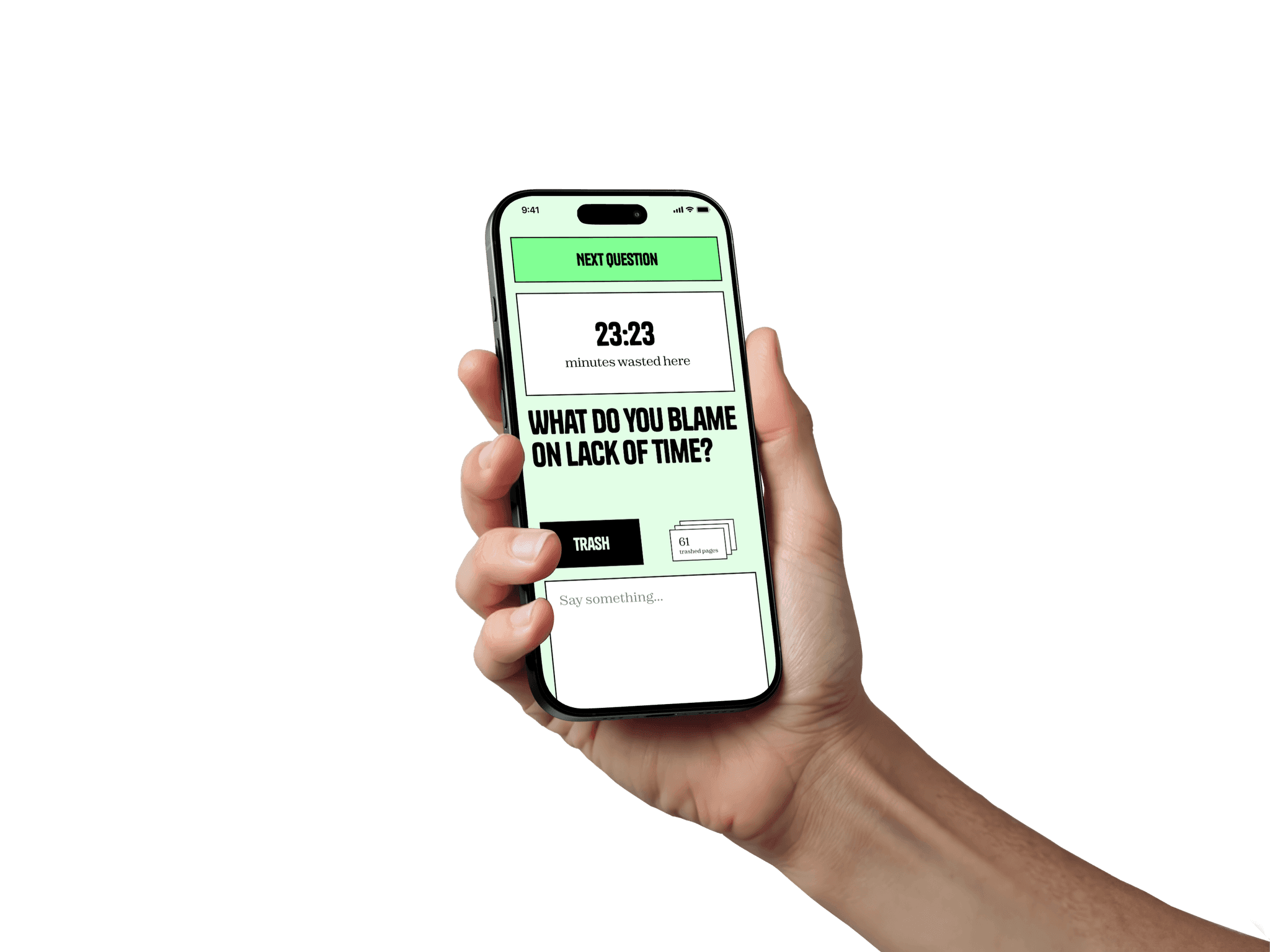
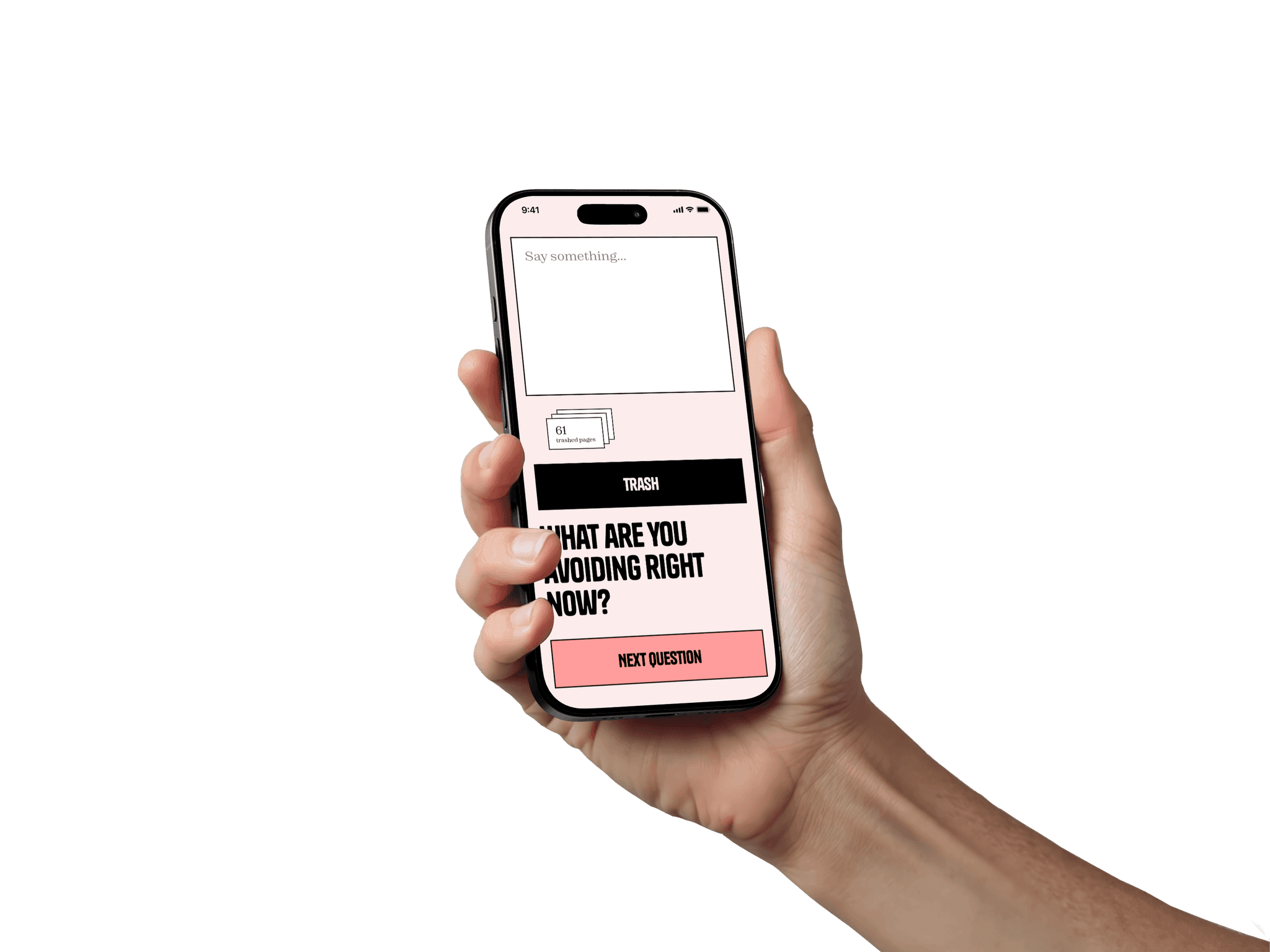
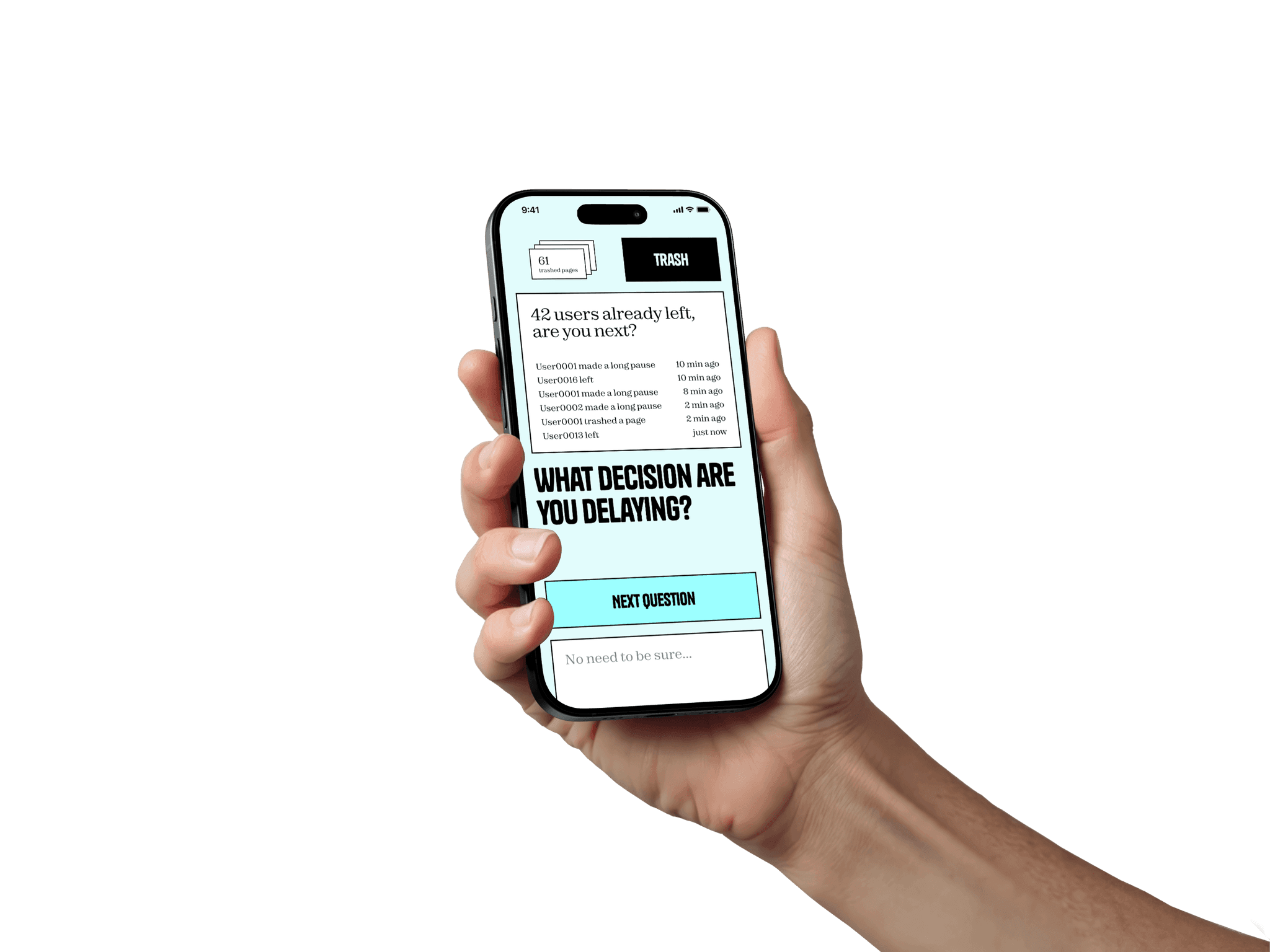
On mobile, the random layouts are preserved through a set of constraints that adapt to smaller screens and enable vertical scrolling. Interface elements remain algorithmically scattered rather than hierarchically ordered, requiring users to actively scroll and search to locate specific content.
The system treats leaving as the most meaningful interaction, hoping that people continue asking themselves questions after the experience.

Each question isolates a single tension, while related questions reappear later with increased pressure, allowing hesitation, self editing, and avoidance to surface over time. Topics are interleaved and the level of discomfort gradually increases, preventing users from settling into a rhythm or understanding where they are in the sequence.
While the experience appears open ended to the user, the system itself is carefully structured, making it possible to observe where individuals choose to stop and to measure how far into discomfort they were willing to go.
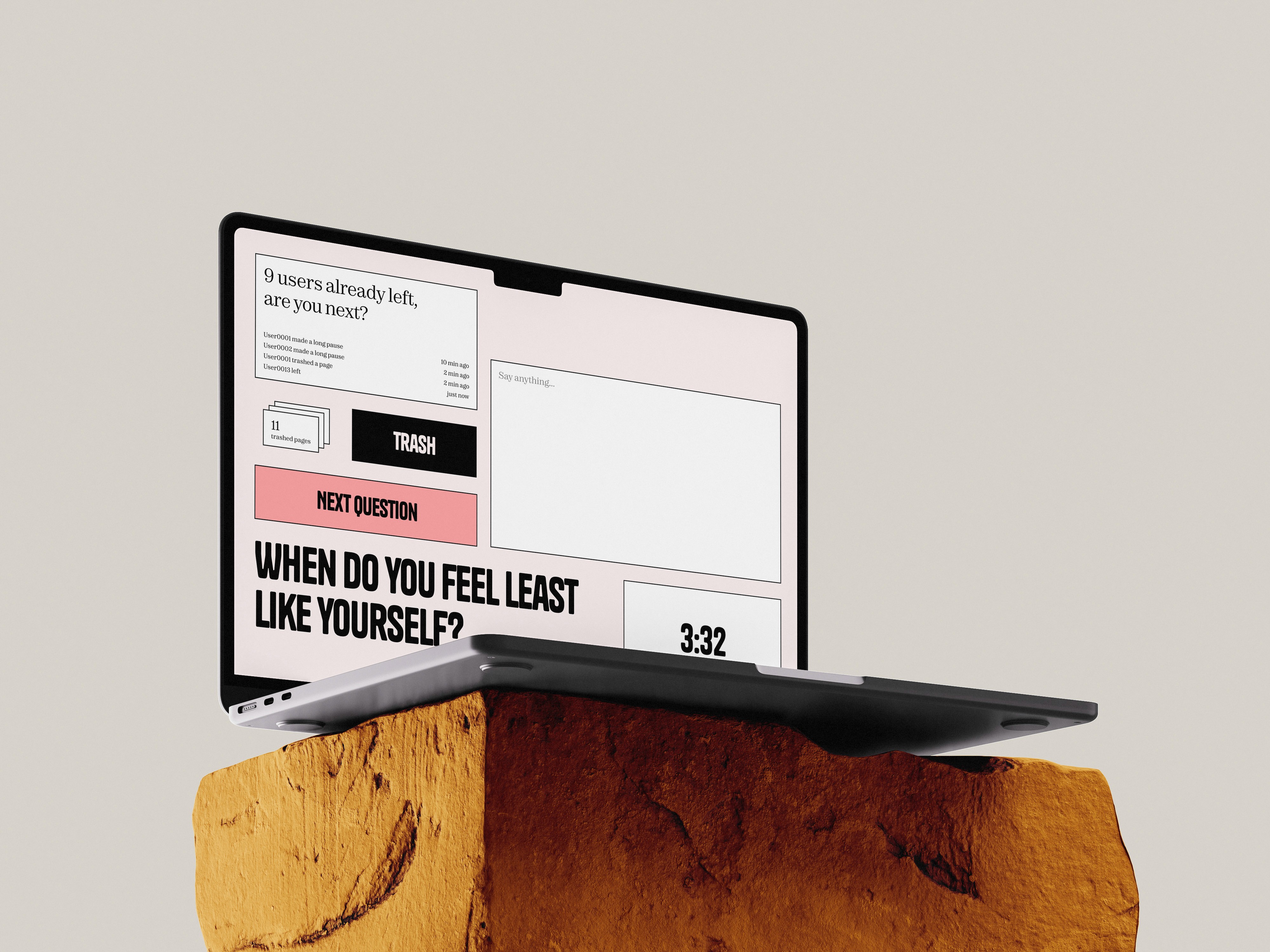
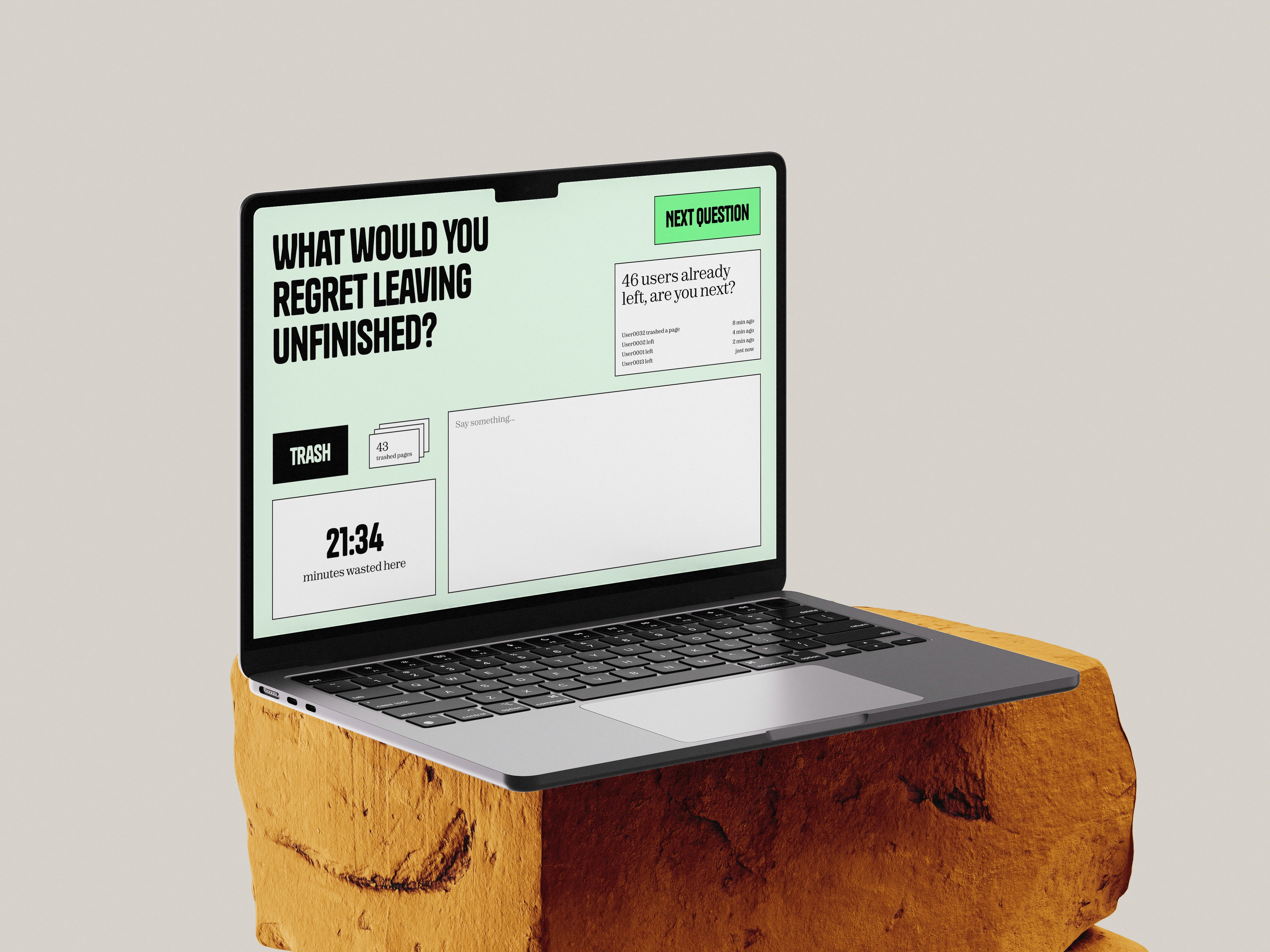
Deferred refuses to personalize and instead builds connection through anonymous traces of discomfort: long pauses, deleted pages, and quitting.
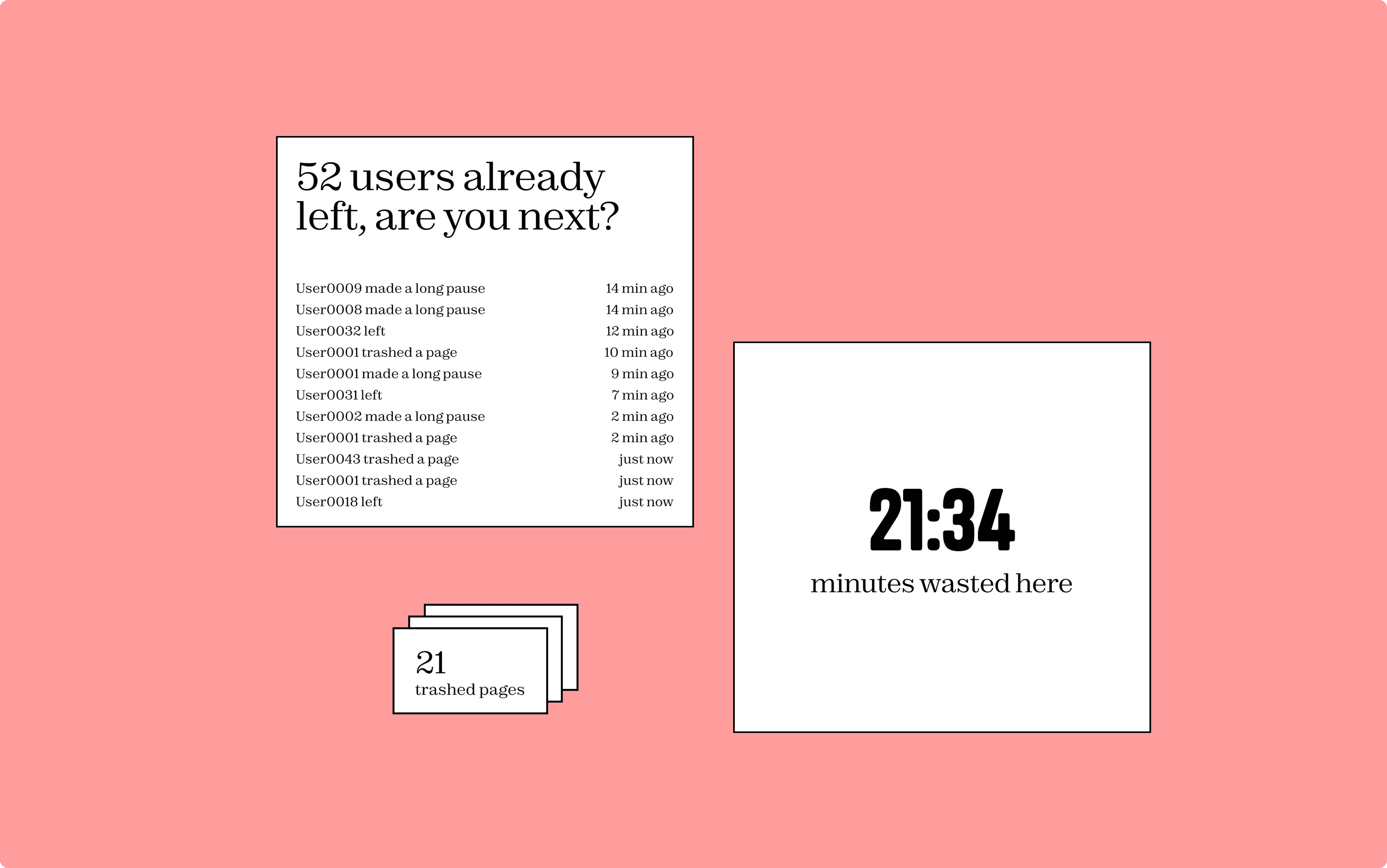
Unlike conventional platforms, Deferred has no interest in knowing who the user is in the ways modern systems usually do. It does not collect identities, preferences, or profile-like data to personalize content. The system does not care who they are or what they write. It exists only to make them confront themselves.
This logic carries into the community layer, where the platform shows only what other systems hide: long pauses, deleted pages, and abandoned sessions from anonymous users. Instead of connecting people through success, identity, or status, Deferred connects them through mistakes and friction, making it easier to relate to strangers.